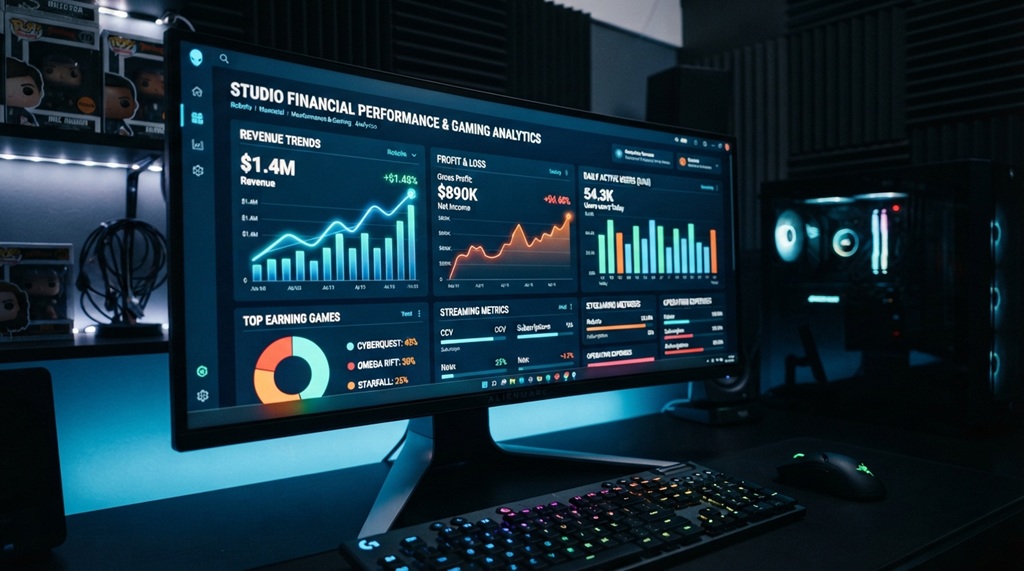
You publish game reviews. You post impressions pieces the day embargo lifts. Traffic looks fine. So why does the bank account tell a different story?
Most gaming content creators track pageviews obsessively and revenue loosely. That’s backwards. A single unprofitable review category can quietly drain hours, hardware budget, and ad revenue for months before anyone notices. This post fixes that blind spot.
What Is a Game Reviews & Impressions P&L Audit?
A game reviews and impressions P&L audit is a structured review of every dollar spent producing review content against every dollar that content generates. It compares hardware costs, review-copy logistics, writer or creator time, and publishing overhead against ad revenue, affiliate commissions, and sponsorship income to reveal true per-title profitability.
Most creators only look at total site revenue. That number hides which content is actually earning its keep. An audit breaks revenue and cost down by content type, so “reviews” and “impressions” get treated as separate business lines, not one blurry bucket.
This matters because reviews and impressions have different cost structures. A review usually needs 15-40 hours of playtime plus a written or filmed piece. An impressions article needs a 2-4 hour preview session and a faster turnaround. Lumping them together in one P&L hides which format actually pays for itself.
Once you separate the two, you can answer the only question that matters: is this content category making money, or is it a hobby you’re subsidizing with your time?
Why Do Gaming Content Creators Need to Audit Their P&L?
Auditing matters because review content has hidden costs traffic reports never show: unpaid playtime, review copies that never convert to affiliate sales, and platform fees that shrink ad revenue by 30-50%. Without an audit, creators keep producing content that looks successful but loses money every month.
Here’s the agitation part. You’ve probably felt it already. You spend a weekend finishing a 60-hour RPG for review, publish 3,000 words, and the piece earns $40 in ad revenue over its lifetime. Meanwhile a 10-minute impressions post on a hyped indie title earns $200 in the same window.
Without a P&L audit, you never see that gap. You just keep grinding through review copies because “that’s what the site does.” An audit turns a vague feeling of being overworked into hard numbers you can act on.
There’s also a business-survival angle. Ad networks change payout rates without warning. Affiliate programs cut commission tiers. A P&L audit run quarterly catches these shifts before they wipe out a content category’s margin entirely.
- Reveals which game genres or platforms generate the best ROI per hour invested
- Exposes review copies that cost shipping or key-code fees but never drove traffic
- Flags declining RPM (revenue per thousand views) trends before they tank quarterly income
- Shows whether impressions content should replace full reviews for lower-tier titles
What Costs Should You Track in a Game Review P&L?
Track five cost categories: creator or writer time (hourly rate x hours played), hardware and peripherals, review-copy logistics, editing and publishing labor, and platform or hosting fees. Time is almost always the largest hidden cost, since a 40-hour game reviewed at even $20/hour equals $800 in labor.
Most audits fail here because creators don’t assign a dollar value to their own time. If you wouldn’t work for free at a day job, don’t let your review pipeline do it either. Pick a realistic hourly rate, even a conservative one, and apply it consistently.
Hardware costs get missed too. A capture card, a second monitor, a controller replaced every year, these all belong in your cost column, amortized over their useful life. If a $300 capture card lasts two years and you publish 100 reviews in that time, that’s $3 of hardware cost per review.
Review-copy logistics are sneaky. Physical copies cost shipping and sometimes taxes. Digital keys still cost the publisher’s PR budget, which affects your relationship and future access, so factor in relationship maintenance time too, things like screenshot approvals and embargo compliance checks.
| Cost Category | What to Include | Typical Range |
|---|---|---|
| Creator/Writer Time | Playtime, drafting, revisions | $300–$1,200 per review |
| Hardware/Peripherals | Consoles, capture cards, controllers (amortized) | $5–$40 per piece |
| Review-Copy Logistics | Shipping, PR coordination, embargo tracking | $0–$25 per title |
| Editing/Publishing Labor | Copyedit, SEO formatting, thumbnail design | $50–$200 per piece |
| Platform/Hosting Fees | CMS, video hosting bandwidth, ad network cut | 10–30% of gross revenue |
How Do You Calculate Revenue From Game Reviews and Impressions?
Calculate revenue by adding display ad income, affiliate commissions from purchase links, sponsorship fees, and any platform bonus programs, then subtracting the platform’s revenue share. Track this per article or video, not just site-wide, using UTM tags or per-page ad unit reporting.
Display ad revenue is the easiest to track but usually the smallest slice for niche gaming content. RPM for gaming content typically runs $3-$15 depending on audience geography and ad network. Multiply pageviews by RPM, divide by 1,000, and that’s your baseline number.
Affiliate revenue is where reviews actually earn their keep. A review with a well-placed “buy on Steam” or retailer link can generate commissions for months after publish. Tag every affiliate link with a unique campaign parameter so you know exactly which article drove which sale.
Sponsorships and paid coverage deals get counted differently. If a publisher pays for guaranteed coverage, that revenue attaches directly to the piece it funded, not to your general pool. Keep these separate in your books, because they have zero ongoing revenue potential once published.
- Pull ad network reports filtered by URL or video ID for the specific piece
- Cross-reference affiliate dashboard clicks and conversions tagged to that content
- Add any flat sponsorship fee tied directly to the review or impression
- Subtract platform revenue share (YouTube’s cut, network ad server fees, etc.)
- Divide the net total by hours invested to get a true hourly rate for that piece
What’s the Best Framework for Auditing Your Content P&L?
Use a rolling 90-day audit cycle: tag every piece of content by category (review vs. impressions), log costs and revenue per piece in a spreadsheet or lightweight tool, then rank all content by net margin and hourly return. Review the bottom 20% every quarter and either fix or cut it.
Ninety days gives affiliate links and ad revenue enough time to mature. A review published last week hasn’t had time to earn its full lifetime value yet, so auditing too early skews your numbers negative and causes panic decisions.
Build a simple spreadsheet with one row per published piece. Columns should include: title, content type, hours invested, hardware cost allocation, total revenue at 30/60/90 days, and net margin. This sounds tedious. It takes about five minutes per piece if you log it right after publishing.
Rank everything by net margin per hour, not total revenue. A blockbuster AAA review might earn $500 total but took 50 hours, netting $10/hour. A quick impressions piece earning $150 in four hours nets $37.50/hour. The second piece is the better business decision, even though it looks smaller on paper.
This is the core of the “solution” step in this framework. Once ranked, you stop guessing and start allocating your limited hours to the content types proven to pay.
How Do You Identify Unprofitable Review Content?

Unprofitable content shows three warning signs: net margin per hour below your target rate, pageview decay within 30 days with no evergreen affiliate pull, and cost overruns from delayed publishing past a game’s hype window. Flag any piece hitting two or more of these signs for format change or discontinuation.
Hype-window misses are the most common killer. A review published three weeks after launch, once search interest and social buzz have already peaked, permanently loses a huge chunk of its potential traffic and affiliate conversions. Track your average days-to-publish against competitor coverage speed.
Niche or low-search-volume titles are another trap. A beautifully written 4,000-word review of a game almost nobody searches for will never recoup 40 hours of labor through ads alone, no matter how good the writing is. Check search volume before committing review hours, not after.
Platform mismatch also kills margin. Long-form written reviews on games better suited to video (fast-paced multiplayer shooters, for example) often underperform because the audience wants to watch gameplay, not read about it. Match format to genre before you invest the time.
- Search volume under 500/month for the game title, combined with 30+ hours of required playtime
- Zero affiliate clicks after 60 days despite decent traffic (broken or missing links)
- Published more than 10 days after major competitor coverage or embargo lift
- Hardware or peripheral cost exceeding 15% of the piece’s total projected revenue
What Tools Help You Track Game Review P&L?
Most creators only need three tools: a spreadsheet (Google Sheets or Airtable) for per-piece cost and revenue logging, a link-tracking tool (Pretty Links, Bitly, or native affiliate dashboards) for attribution, and a basic accounting tool (Wave or QuickBooks) for tax-ready expense categorization. Enterprise analytics platforms are rarely necessary at this scale.
Airtable beats a plain spreadsheet if you’re tracking more than 20 pieces a month, because you can filter and sort by content type, platform, and margin instantly without messing with formulas every time.
For affiliate attribution, native dashboards (Amazon Associates, Steam affiliate programs, retailer partner portals) already break down clicks and conversions by URL. Pull that data monthly rather than trying to build your own tracking system from scratch. How to Become a Top Player in Galactic Tycoons
Free accounting tools like Wave handle expense categorization well enough for most solo creators and small teams. You don’t need enterprise software until you’re managing multiple contributors and six-figure ad revenue.
| Tool Type | Recommended Option | Best For |
|---|---|---|
| Content Cost/Revenue Log | Airtable or Google Sheets | Per-piece P&L tracking |
| Link Attribution | Pretty Links, native affiliate dashboards | Revenue-to-content mapping |
| Accounting | Wave, QuickBooks | Expense categorization, tax prep |
How Often Should You Audit Your P&L?
Run a light audit monthly (revenue and top-line costs only) and a full audit quarterly (per-piece margin ranking and content strategy adjustments). Annual audits are too slow to catch ad network rate drops or affiliate program changes before they cause real damage.
Monthly checks are quick. Pull total ad revenue, total affiliate revenue, and total hours logged for the month. Compare against the prior month. This takes 20 minutes and catches obvious problems like a sudden RPM drop or a broken affiliate link across multiple posts.
Quarterly audits are where the strategic decisions happen. This is when you rank every piece from the last 90 days, identify the bottom performers, and decide whether to retire a content category, switch formats, or renegotiate review-copy relationships with publishers who aren’t driving return.
Skipping to annual audits is the single biggest mistake creators make. A full year of publishing unprofitable review content, discovered only in December, is a year you can’t get back. Quarterly cycles give you four chances a year to course-correct instead of one.
Conclusion: Turn Your Review Pipeline Into a Real Business
Here’s the solution in plain terms. Stop treating “reviews” and “impressions” as one undifferentiated content bucket. Separate them. Track cost per piece, including your own time. Track revenue per piece, including affiliate attribution. Rank everything by net margin per hour, not total pageviews.
Run this audit monthly for a quick pulse check and quarterly for real strategic decisions. Cut or reformat the bottom 20% every quarter. Double down on whatever format and genre consistently pays your target hourly rate.
This isn’t about loving games less. It’s about making sure the business behind your coverage survives long enough to keep covering them. A creator who audits their P&L quarterly outlasts one who doesn’t, every time.
Ready to run your first audit? Build a simple three-column tracker today: content type, hours invested, and total revenue at 90 days. Do it for your last 10 published pieces before you write your next review. The numbers will tell you exactly where to focus next.
Frequently Asked Questions
What is a P&L audit for gaming content?
A P&L audit for gaming content is a per-piece comparison of production costs (time, hardware, logistics) against revenue (ads, affiliates, sponsorships) to determine which reviews and impressions are actually profitable.
How much does a typical game review cost to produce?
Most full reviews cost $350-$1,200 when creator time is valued fairly, factoring in 15-40 hours of playtime plus writing, editing, and publishing labor at a realistic hourly rate.
Are impressions articles more profitable than full reviews?
Often yes. Impressions pieces take 2-4 hours versus 15-40 hours for a full review, so even with lower total revenue, the net margin per hour is frequently higher for impressions content.
What’s a good RPM for gaming content?
Gaming content typically earns $3-$15 RPM (revenue per thousand views) depending on ad network, audience geography, and content format, with video generally outperforming text on RPM alone.
How do I track affiliate revenue by article?
Tag every affiliate link with a unique UTM or campaign parameter, then cross-reference clicks and conversions in your affiliate dashboard against the specific article or video URL monthly.
Should I stop reviewing low-search-volume games?
Not automatically, but flag them. If a title has under 500 monthly searches and needs 30+ hours of playtime, calculate expected ad and affiliate revenue first to confirm the hours are worth it.
What’s the biggest mistake creators make in their content P&L?
The biggest mistake is valuing their own time at zero. Unpaid playtime and writing hours are real costs, and ignoring them makes unprofitable content look break-even or profitable when it isn’t.