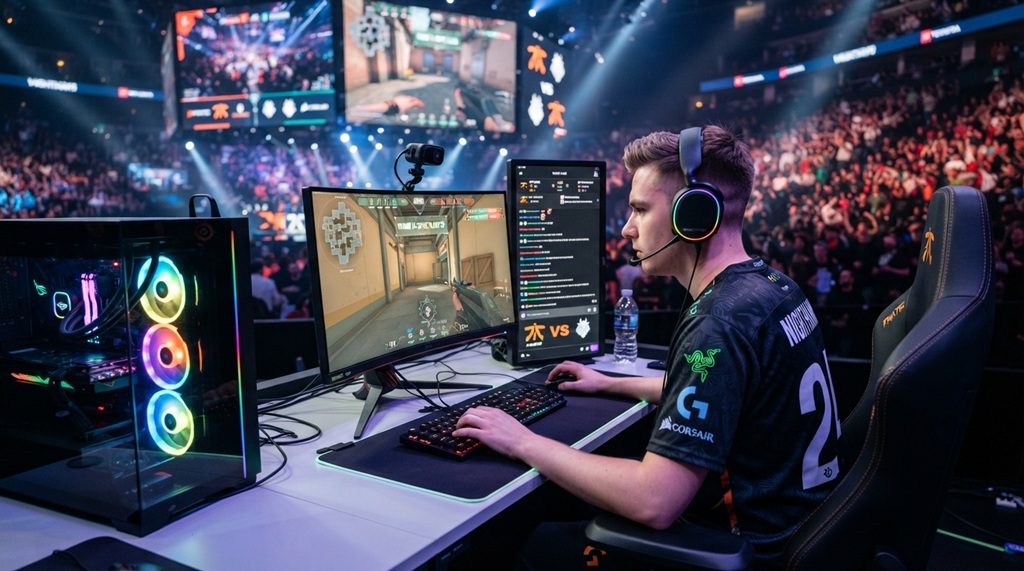
You want to join an esports team. To get there, you need three things: real skill, visible proof of that skill, and the right people watching. This guide breaks down exactly how to build all three.
Most players train for hours but never get scouted. Why? Because they practice the wrong way, or they never put their skills where recruiters can see them. So, this article fixes both problems.
By the end, you’ll have a clear training plan and a simple path to get noticed. Let’s get into it.
What It Really Takes to Join an Esports Team

Joining an esports team takes more than raw talent. In fact, teams look for steady skill, good communication, and a strong online reputation.
Most new players focus only on the basics aim, reflexes, combos. Those matter, of course. But scouts and team managers care just as much about how you play with others. For instance, do you call out enemies clearly? Can you stay calm when you’re losing? And can you adjust your plan mid-match?
The Three Pillars Teams Look For
Every competitive team, from amateur squads to pro clubs, checks for the same three things:
- Skill with the game – your raw in-game performance, shown through stats like KDA, win rate, or APM
- Game sense – your ability to read situations, guess enemy moves, and make smart calls fast
- Team fit – how well you talk to others, take feedback, and back up your teammates under pressure
If you ignore any one of these, your progress stalls. For example, a player with great aim but poor communication rarely makes it past tryouts.
How to Build a Real Training Routine
A real training routine mixes solo practice, team practice, and review time. Random matches alone won’t build the skills scouts want to see.
So, start with a weekly plan instead of a vague goal like “get better.” A plan gives your brain a pattern to follow, and patterns build habits faster than good intentions do.
Solo Practice: Sharpen Your Mechanics
Spend 30-45 minutes a day in aim trainers, custom game modes, or drills that fit your role. This isn’t about grinding ranked for hours. Instead, it’s about focused, repeated practice.
First, pick two or three weak spots say, crosshair placement or reaction time. Then, drill only those for a set period. According to sports psychology research, focused practice beats unfocused repetition every time. The same idea applies to esports.
Team Practice: Build Chemistry
If you already play with a squad, schedule regular scrims against other teams. As a result, scrims expose gaps that solo queue never will, like poor rotations or unclear callouts.
No squad yet? Then join a community Discord server built around your game. Many of these groups run regular scrim nights open to new players who want practice partners.
Review Sessions: Learn From Your Mistakes
After every scrim or ranked session, watch your replay. Look for bad decisions, not just mistakes in execution.
Next, ask yourself a few simple questions. Did you take a fight you should have avoided? Did you miss an obvious rotation? Afterward, write down two or three takeaways from each session. Over time, small notes add up to big improvements.
Which Skills Actually Get You Noticed
Scouts notice steady play, leadership, and clutch performance more than flashy highlight clips. A single great play won’t build a career. However, weeks of solid, repeated performance will.
Consistency Over Highlights
One amazing play can go viral, but it won’t get you signed. Instead, teams want players who perform well match after match, not just once in a while.
So, track your own stats over time. If your win rate or KDA climbs across a full season, that trend tells a stronger story than any single clip.
Communication Under Pressure
Teams lose players over bad attitudes far more often than over bad mechanics. Meanwhile, a player who stays calm, gives clear callouts, and supports teammates during a loss stands out right away.
Try narrating your thoughts out loud during matches, even in solo queue. Over time, this builds the habit of clear communication before you ever join a real team.
Adaptability Mid-Match
Good players stick to a plan. Great players change the plan when it stops working. That’s why scouts pay close attention to how fast you adjust strategy once your first plan fails.
Where to Actually Get Seen by Teams and Scouts
You get seen by streaming often, joining open tournaments, and staying active where scouts already look. Skill alone stays hidden unless you put it somewhere visible.
Accelerate Exposure Through Open Tournaments
Participating in amateur and open-bracket tournaments on competitive platforms like Battlefy, Toornament, and FACEIT provides the fastest, most direct route to building a verifiable track record in front of talent scouts and team organizers. Even modest placements in these structured events put your handle on official leaderboards, proving you possess the discipline to perform under high-pressure, competitive conditions. Beyond individual player recognition, navigating these tournaments gives you a first-hand look at modern competitive frameworks; if you eventually decide to leverage that competitive momentum into a formal organization, structure a gaming vs esports business plan will help you convert player authority into a scalable commercial enterprise.
Stream or Post Clips Regularly
You don’t need thousands of viewers. Instead, you need a steady, visible record of your play. So, stream two or three times a week, or post short match clips that show clear decision-making, not just kills.
Also, tag your clips with your game and role. Because of this, recruiters and community managers can find you directly when they scout for open roster spots.
Get Active in Community Discords
Most esports scouting today happens inside Discord servers, not on social media. So, join servers for your specific game, your region, and your rank tier.
Introduce yourself, join scrim groups, and stay visible over time. As a result, community managers often recommend active, reliable players directly to team organizers.
Common Training Mistakes That Hold Players Back

Most players plateau because they grind without a plan, ignore feedback, or play too much and burn out. Here’s how to avoid each trap.
Grinding Without a Plan
Playing ten hours of ranked without a clear focus rarely fixes your weak spots. Instead, it just reinforces old habits, good or bad.
So, fix this by setting one clear goal per session, like “improve my rotation timing” or “cut down on needless deaths.”
Ignoring Feedback
Many players brush off criticism from teammates or coaches, especially early on. However, that habit blocks growth fast.
Instead, treat every bit of feedback as useful data. You don’t have to agree with all of it, but you should always think it over.
Burning Out From Overplaying
Long, messy sessions lead to fatigue, and fatigue lowers reaction time and decision quality. Oddly enough, playing less with sharper focus often improves your stats faster than playing more.
So, build in rest days. During downtime, your brain locks in the skills you practiced, not just during active play.
A Simple Weekly Training Plan to Follow
Here’s a sample plan you can adapt to your own schedule and game:
| Day | Focus |
|---|---|
| Monday | Solo mechanics drills (30-45 min) |
| Tuesday | Ranked play with a specific goal |
| Wednesday | Team scrim or Discord practice group |
| Thursday | Replay review + notes |
| Friday | Solo mechanics drills |
| Saturday | Tournament or competitive match |
| Sunday | Rest day or light casual play |
Feel free to adjust the days based on your own life and energy. After all, the key isn’t the exact schedule — it’s having any schedule at all.
Frequently Asked Questions
How long does it take to get noticed by an esports team?
It varies a lot, but most players who train often and compete regularly start seeing interest within six months to a year. Overall, progress depends on your game, your rank, and how visible you make your play.
Do I need to be a top-ranked player to join a team?
No. In fact, many amateur and semi-pro teams value communication and steady play over raw rank. So, a mid-tier player with great teamwork often beats a high-rank player who can’t work with others.
Should I focus on one game or play multiple titles?
Focus on one game if your goal is a spot on a competitive team. Otherwise, splitting your attention across many titles slows your progress in any single one, and scouts look for depth, not breadth.
Is streaming necessary to get scouted?
It’s not required, but it helps a lot. For example, streaming and posting clips give scouts an easy way to check your skill before they ever invite you to a tryout.
What age do most esports teams recruit players?
Age rules vary by game and organization. Generally, many amateur teams accept players in their mid-to-late teens, while pro clubs often set a minimum age of 16-18 depending on regional rules. So, always check a team’s own requirements before you apply.
Final Thoughts
Getting noticed by an esports team comes down to three things: train with purpose, perform steadily, and put your skill somewhere visible. If you skip any one of these, even a talented player can stay invisible for years.
So, start small. Pick one training habit from this guide, one platform to get visible on, and stick with both for a month. In the end, consistency, more than raw talent, is what actually gets players signed.