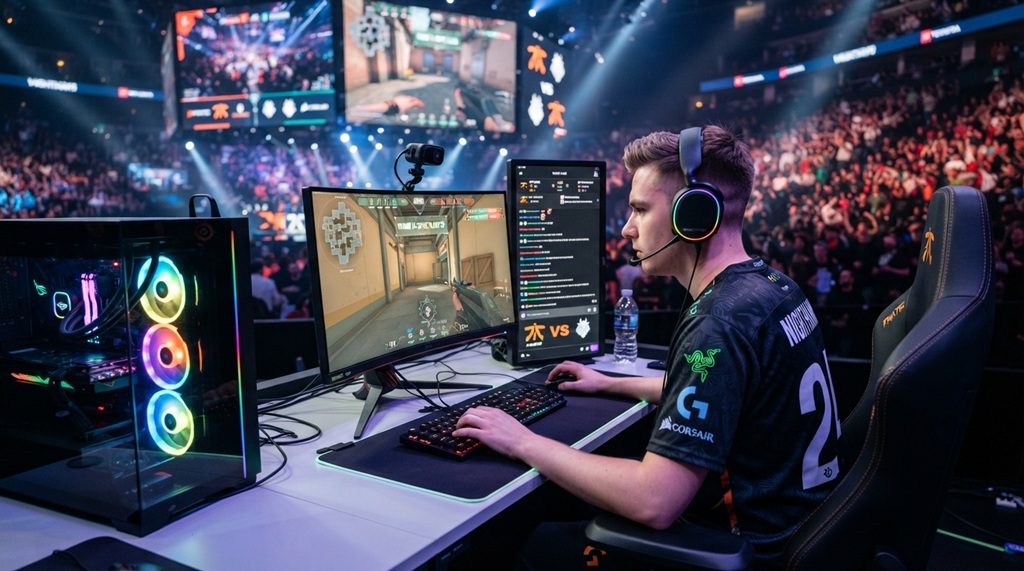
A gaming business plan and an esports business plan look similar on the surface, but investors read them very differently. Gaming plans are judged on product economics retention, monetization, and unit costs per player. Esports plans are judged on audience economics sponsorship value, media rights, and community growth. If you blend the two without separating the revenue logic, you’ll confuse the very people you’re trying to convince to write a check.
This matters more than ever because gaming and esports investors are no longer just chasing hype metrics like downloads or viewership. They’re calculating Lifetime Value (LTV) — how much value they’ll extract from backing your company over time and comparing it against the risk profile of your business model. A plan that clearly separates gaming mechanics from esports mechanics, while showing how they reinforce each other, gives investors the clarity they need to project long-term returns.
This guide breaks down exactly how to structure that plan, section by section, so you can present a document that speaks the language of both product investors and media/sponsorship investors at once.
Why Gaming and Esports Business Plans Need Different Frameworks

Gaming and esports plans need different frameworks because they generate revenue through fundamentally different mechanisms one sells a product experience, the other sells an audience.
A gaming company’s core asset is the player: how long they stay engaged, how much they spend, and how cheaply you can acquire the next one. An esports company’s core asset is the audience: how many eyeballs you can consistently deliver to sponsors, broadcasters, and advertisers. When these two models get mashed into one generic plan, investors struggle to identify which financial levers actually drive returns, and that ambiguity tends to lower valuation confidence rather than raise it.
The Core Financial Differences
- Gaming: revenue tied to in-game purchases, subscriptions, or unit sales; growth measured by DAU/MAU, retention curves, and ARPU (average revenue per user).
- Esports: revenue tied to sponsorships, media rights, ticketing, and merchandising; growth measured by viewership hours, social reach, and brand deal renewal rates.
Presenting both in the same financial model without labeling which numbers belong to which side is one of the most common mistakes founders make when pitching hybrid gaming-esports ventures.
Structuring the Executive Summary for Dual Audiences
The executive summary should state upfront whether your business is primarily a gaming company with an esports layer, an esports organization with a gaming product, or a true hybrid because this framing shapes everything an investor reads afterward.
Don’t leave this ambiguous in the hope of appealing to more investor types. A summary that tries to be everything to everyone usually reads as unfocused. Instead, pick a primary identity, then explain the secondary layer as a value multiplier.
What to Include in the Summary
- One sentence defining your core business model (gaming-first or esports-first)
- Your target market and current traction (players, viewers, or both)
- The single biggest LTV driver you’re asking investors to bet on
- A one-line summary of your funding ask and intended use of funds
Keep this section under half a page. Investors skim summaries first to decide whether the full plan is worth their time.
Building the Market Analysis Section
The market analysis section should separate the gaming market opportunity from the esports market opportunity, then show where they intersect for your specific product. Treating “gaming and esports” as one combined market in your Total Addressable Market (TAM) calculation is a red flag to experienced investors, given the distinct buyer behaviors across both sectors.
Understanding the financial rift between game developers and tournament organizers is critical. While publishers monetize software sales, esports operations rely on media rights, brand partnerships, and event yield. Master these specific revenue models by examining profit from esports competitive gaming before finalizing your market analysis.
Gaming Market Data Points to Include
- Size of your specific gaming genre or platform segment
- Player acquisition cost benchmarks in that genre
- Comparable titles’ retention and monetization performance
Esports Market Data Points to Include
- Viewership and engagement trends for your title or genre, according to industry experts and gaming market research firms
- Sponsorship spend trends in your specific esports category
- Competitive landscape of leagues, tournaments, or organizations already operating in that space
Where possible, cite named industry reports (such as those from Newzoo, Nielsen Esports, or similar research firms) rather than vague claims, and clearly note when a figure is an estimate rather than confirmed data.
Designing the Revenue Model: Gaming vs Esports Streams

Your revenue model section needs two distinct tables or at minimum, two clearly labeled subsections so investors can evaluate each stream’s LTV contribution independently before you show how they combine.
This is where most gaming vs esports plans fall apart. Founders often stack all revenue lines together into one blended projection, which makes it impossible for an investor to stress-test either side of the business on its own.
Gaming Revenue Streams
- In-app purchases or DLC
- Subscription tiers or battle passes
- Direct game sales
- Licensing to other platforms
Esports Revenue Streams
- Sponsorship and brand partnership deals
- Media rights and streaming platform deals
- Ticket sales for live events
- Merchandising tied to teams or talent
The Insight Most Plans Miss: Cross-Stream LTV Multipliers
Here’s an angle that rarely gets discussed in standard templates: the real investor value in a combined gaming-esports business isn’t just having two revenue streams it’s the cross-pollination effect where esports content acts as a retention and reactivation tool for your gaming product, lowering your effective player acquisition cost.
For example, if competitive tournament content brings lapsed players back into your game (reactivation) at a fraction of the cost of paid acquisition, that’s a measurable LTV improvement you can model and present as a distinct line item “esports-driven reactivation value.” Very few business plans quantify this connection explicitly, and doing so signals to investors that you understand how the two sides of your business actually reinforce each other financially, rather than just existing side by side.
Presenting Financial Projections That Investors Trust
Financial projections should show three-year forecasts with gaming and esports revenue lines kept separate, plus a blended total, so investors can see both the individual trajectory of each stream and the combined business outcome.
Avoid the temptation to present only optimistic “hockey stick” growth curves. Investors calculating LTV want to see your assumptions, not just your conclusions.
What Strong Projections Include
- Player acquisition cost (CAC) and projected LTV per player, shown separately from sponsorship CAC and LTV per brand partner
- Churn assumptions for both players and viewers
- A clearly stated break-even timeline for each revenue stream
- Sensitivity scenarios (conservative, base, and optimistic case)
Being transparent about downside scenarios generally builds more investor trust than presenting a single best-case projection, since it shows you’ve actually stress-tested the model rather than just built a pitch deck number.
Outlining Team, Operations, and Risk Factors
This section should explain who runs the gaming side and who runs the esports side, because these functions typically require different expertise, and investors want to see that gap is covered.
A gaming product needs strong development, live-ops, and monetization expertise. An esports operation needs event production, talent management, and sponsorship sales expertise. Rarely does one person excel at both.
Key Points to Cover
- Team members responsible for each business line, with relevant background
- Operational dependencies (engine/platform for gaming, tournament infrastructure for esports)
- Risk factors specific to each side for gaming this might be platform policy changes or player churn; for esports it might be sponsor budget cuts or league instability
- Your mitigation plan for the top two or three risks in each category
Listing risks honestly, rather than glossing over them, is generally viewed favorably by investors who are trying to accurately price the risk-adjusted return in their LTV calculations.
Frequently Asked Questions
Should a gaming and esports business plan be one document or two separate plans?
It should be one document with clearly separated sections for gaming and esports financials, rather than two entirely separate plans. This lets investors see both models independently while understanding how they reinforce each other, which is usually more persuasive than isolated documents.
What’s the biggest mistake founders make when combining gaming and esports revenue projections?
The most common mistake is blending gaming and esports revenue into one combined line item without breaking out the individual assumptions behind each. This makes it difficult for investors to stress-test either revenue stream, which typically lowers confidence in the plan overall.
How do investors typically calculate LTV differently for gaming versus esports businesses?
For gaming, LTV is generally based on player spend, retention curves, and engagement duration. For esports, LTV is often calculated from sponsor contract value, renewal likelihood, and audience growth trends, so the underlying formulas and data inputs differ significantly between the two.
Is it better to pitch as a gaming company with an esports division, or vice versa?
This depends on where your current traction and strongest metrics lie. If your player base and monetization data are stronger, lead as a gaming company with an esports layer; if your audience and sponsorship traction are stronger, lead with esports and present gaming as the supporting product.
How long should a gaming vs esports business plan be for investor review?
Most investor-ready plans in this space run between 15 and 25 pages excluding appendices, long enough to cover both revenue models in detail without becoming so dense that key financial assumptions get buried.
Conclusion
A gaming vs esports business plan earns investor confidence when it treats both sides as related but distinct financial systems, not one blended narrative. Structure your executive summary to declare a clear primary identity, separate your market analysis and revenue models by stream, and use financial projections that show your assumptions rather than just your growth curves. The plans that stand out are the ones that go a step further and quantify how the two sides interact like showing how esports content lowers gaming player acquisition costs because that’s the kind of specific, defensible insight that helps investors project long-term LTV with real confidence.