Smart map control wins multiplayer matches because it lets you dictate where fights happen, not the other way around. Players who control key zones control the pace of the game. They pick fights on their terms and avoid the ones they can’t win.
Most players focus only on their own kills and deaths. They forget the bigger picture: the map itself. But the map decides who has the resource lead, who holds the high ground, and who gets caught off guard. Once you learn to read it, you stop reacting and start dictating.
This guide breaks down exactly how skilled players use map control to win. You’ll learn how to read the map, hold key positions, gather information, and coordinate with your team. Each tip works across most competitive multiplayer titles, from shooters to MOBAs to battle royales.
What Is Map Control and Why It Matters
Map control means owning the strategic areas of a map so your team decides where and when fights happen. It’s not about kills. It’s about position, timing, and information.
A team with map control usually has three advantages. First, they see enemy movements before enemies see theirs. Second, they hold better positions for fights, like high ground or chokepoints. Third, they control resources, such as loot, objectives, or map-specific buffs.
Think of map control as territory in a board game. The player who owns more squares has more options. The player who owns fewer squares gets pushed into corners. Every match plays out the same way, just with different visuals.
According to industry experts and competitive coaches, teams that consistently secure key map zones win a higher percentage of close-round matches. This pattern holds true across genres, from tactical shooters to MOBAs.
How to Read the Map Before You Move
Reading the map means checking sound cues, minimap pings, and known spawn or rotation patterns before you commit to any push. Good map reading happens before you move, not after you get caught.
Track Enemy Patterns Early
Watch how enemies rotate in the first few minutes of a match. Most players follow habitual routes. If you notice a pattern, you can predict their next move and set up ahead of them.
Use Sound and Visual Cues
Footsteps, gunfire, ability casts, and minimap alerts all carry information. Skilled players treat these cues like a second map layered over the real one. Ignoring sound is one of the fastest ways to lose map control.
Check Timers and Objectives
Many games run on timers: respawns, objective spawns, or buff refreshes. Knowing these timers lets you claim a zone right when it becomes valuable, instead of arriving late.
Controlling Key Zones and Chokepoints
Controlling chokepoints and high-value zones forces enemies to fight on your terms, which is the core of smart map control. A chokepoint is any narrow path enemies must pass through, like a doorway, bridge, or corridor.
Why Chokepoints Matter
Whoever holds a chokepoint controls the flow of the entire match. Enemies must either fight through it, wait it out, or waste time finding another route. All three options cost them tempo.
Hold Sightlines, Not Just Spots
Holding a spot means nothing without sightlines. A good position lets you see enemies before they see you. Always ask: can I spot movement from here, or am I just standing still?
Time Your Rotations
Rotating too early gives away your position. Rotating too late means you miss the fight. Aim to arrive at a contested zone just as it becomes active, not before and not after.
Using Vision and Information to Dominate the Map
Vision control means actively gathering information through scouting tools, wards, drones, or map awareness, and denying that same information to your enemies. Information often matters more than firepower.
Deploy Scouting Tools Early
Whether your game uses wards, drones, recon abilities, or minimap pings, deploy them early and often. A single scouting tool can reveal an ambush before it happens.
Deny Enemy Vision
Map control isn’t only about what you see. It’s also about what enemies can’t see. Destroying enemy wards, jamming their scans, or holding elevated positions all reduce their information advantage.
Use the Fog of War Against Them
In games with limited visibility, moving through unseen paths lets you appear where enemies don’t expect you. This single tactic often decides close matches, since surprise position beats raw skill in many fights.
Master Team Coordination to Lock Down the Map
No single player controls a map alone enduring map control is forged through crisp communication, sharp spatial awareness, and clearly defined roles that mold five individual players into one cohesive strategic unit. When your team seamlessly calls out positions and anchors critical choke points, you actively force opponents into predictable movement corridors, stripping away their options and handing your squad a massive tactical edge. Furthermore, combining aggressive spatial control with knowing master stealth mechanics and never get caught in games ensures you can execute sudden, unpunishable flanks that dominate every single round.
Assign Zone Responsibility
Give each player, or each pair, a zone to watch or hold. This prevents overlap and makes sure no area gets left open by accident.
Call Out Enemy Positions Fast
The moment you spot an enemy, call it out. A three-second delay can mean the difference between a controlled fight and a surprise wipe.
Rotate as a Unit
Uncoordinated rotations split your team and create easy kills for the enemy. Move together, or make sure everyone knows who’s holding the current position while others rotate.
Common Map Control Mistakes to Avoid
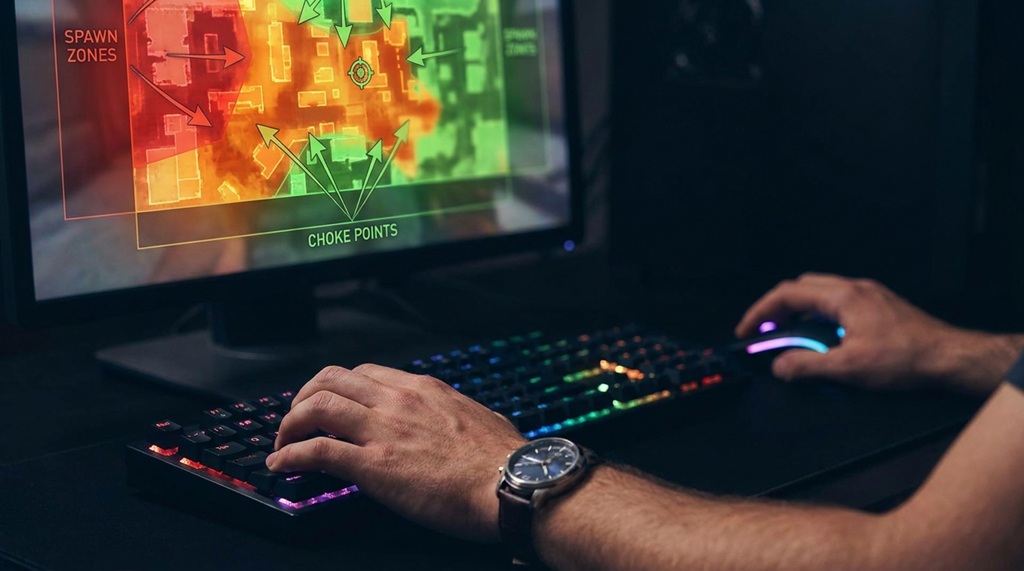
Most players lose map control by overextending alone, ignoring sound cues, or holding a position too long after it stops providing value. These mistakes repeat across almost every multiplayer title.
Overextending Without Backup
Pushing too far ahead of your team gives up map control instantly. You lose sightlines to your teammates and become an easy isolated target.
Holding a Dead Position
Some players hold a spot long after it stops mattering. If the objective moves or the fight shifts elsewhere, your “control” becomes wasted time.
Ignoring the Minimap
The minimap holds constant, free information. Players who check it only occasionally miss rotations, objective spawns, and incoming threats that could have been avoided.
Advanced Map Control Tips for Ranked Play
At higher ranks, map control shifts from holding zones to trading tempo, meaning you give up a small area to gain a bigger advantage elsewhere. This is the angle most beginner guides skip entirely.
Tempo trading works like this: instead of fighting to keep every zone, you deliberately let the enemy take a low-value area while your team secures a higher-value one at the same time. The enemy “wins” a fight that barely matters, while you win the map.
This approach requires trust in your team and a clear read on which zones actually matter that match. Objective locations, resource density, and round timing all affect zone value, so the same map can play differently from one match to the next.
Ranked players who master tempo trading often look like they’re “losing” small skirmishes while quietly winning the overall map state. By the mid-to-late game, that quiet advantage turns into full control of the server or lobby.
Frequently Asked Questions
What is map control in multiplayer games?
Map control is the strategic advantage of owning key zones, sightlines, and information on a map. It lets your team decide where fights happen instead of reacting to enemy movement. Games across genres, from shooters to MOBAs, reward players who master this skill.
How do I improve my map awareness?
Start by checking the minimap every few seconds instead of only during fights. Pay attention to sound cues and known spawn or rotation timers. Over time, this becomes automatic and dramatically improves your decision-making.
Does map control matter more in solo or team play?
Map control matters in both, but it compounds faster in team play. One player with great map sense can win individual fights, but a coordinated team with shared map control can dominate entire matches.
Can new players learn map control quickly?
Yes. Map control is a learnable skill, not raw talent. Start with one habit, like checking the minimap regularly or calling out enemy positions, and build from there. Most players see noticeable improvement within a few sessions.
Is map control more important than mechanical skill?
Both matter, but map control often decides close matches where mechanical skill is roughly equal. According to competitive coaches, positioning and information frequently outweigh raw aim or reaction speed once players reach a similar skill level.
Conclusion
Smart map control turns you from a reactive player into a strategic one. By reading the map early, holding key zones, gathering information, and coordinating with your team, you shift matches in your favor before the first shot fires.
Start small. Pick one habit from this guide, like tracking sound cues or assigning zone responsibility, and apply it in your next match. Map control compounds quickly, and once you see the map as a weapon instead of a backdrop, your win rate will follow.