
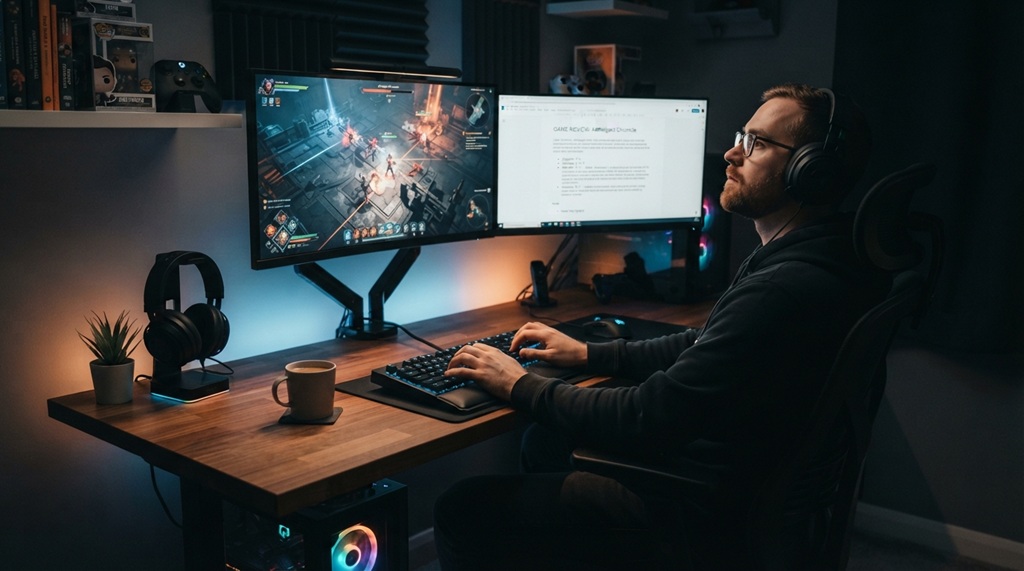
An unbiased game review tells readers what a game actually does, not what you wish it did. You separate personal taste from factual observation. You test the game fully before you judge it. You back every opinion with a clear reason.
Gamers trust reviews that feel honest. They can spot fake hype in seconds. They know when a reviewer skipped the boring parts or ignored the bugs. Trust builds when you show your work, not just your verdict.
This guide breaks down exactly how to write a review that holds up. You’ll learn how to spot your own bias, structure your review fairly, and back up your claims with real evidence. No fluff. No fanboy language. Just a clear process you can use for your next review.
Why Bias Creeps Into Game Reviews

Bias creeps in when a reviewer forms an opinion before finishing the game. This happens more often than most writers admit.
Common Sources of Reviewer Bias
Reviewers often fall into a few traps without noticing:
- Brand loyalty. You loved the last three games from this studio, so you expect to love this one too.
- Sunk cost feelings. You spent 40 hours on the game, so you feel you need to justify that time with a positive score.
- Early impressions. The first two hours felt amazing, so you stop paying close attention to flaws later on.
- Hype exposure. You saw the trailers, read the previews, and followed the developer on social media before playing a single minute.
- Free copies or press access. A review code from the publisher can create a subtle sense of obligation, even if no one asked for a favor.
None of these traps make you a bad reviewer. They make you human. The goal isn’t to erase bias completely that’s impossible. The goal is to notice it and correct for it before you publish.
How Subtle Bias Distorts Game Reviews
Bias rarely announces itself directly; instead, it quietly embeds within emotional phrasing, unexamined assumptions, and unsupported claims. Describing a title as a “masterpiece” or declaring that “players will love this mechanic” projects personal taste onto the audience rather than letting the game’s design speak for itself. Objective journalism requires grounding every assertion in specific, demonstrable mechanics explaining precisely how the combat loop functions rather than simply labeling it “amazing.” Beyond momentary gameplay, maintaining neutrality also demands looking past launch-day hype to evaluate a title’s structural health and long-term ecosystem. This is especially vital when assessing persistent-world titles, where active population metrics and player retention offer the empirical context needed to judge whether a game remains genuinely viable a analytical approach highlighted in our 2026 tibia player count breakdown.
How to Prepare Before You Start Writing
Good reviews start before you open your laptop. Preparation shapes how fair your final review will be.
Play the Full Game First
Finish the main story or, for open-ended games, log enough hours to see most core systems. A review written after two hours misses late-game content, difficulty spikes, and pacing issues that only show up over time. Industry guidelines from major outlets generally recommend finishing a game, or getting close to it, before publishing a full review.
Take Notes While You Play
Write down your reactions in real time. Note the exact moment a bug happened, the mission where pacing dragged, or the boss fight that felt unfair. Fresh notes are far more accurate than memories from a week ago. This also gives you specific examples to cite later, instead of vague statements like “the game feels off sometimes.”
Set Your Review Criteria Before You Play
Decide in advance what you’ll judge: gameplay mechanics, story, visuals, sound, performance, and value for money. Having a fixed checklist stops you from grading the game only on the parts you personally enjoyed most.
How to Structure a Fair and Balanced Review
A fair review gives equal attention to strengths and weaknesses. It doesn’t bury the flaws in one small paragraph while spending five paragraphs on praise.
Cover Both Strengths and Weaknesses in Every Section
Instead of a single “pros and cons” list at the end, weave balance into each section. When you discuss combat, mention what works and what doesn’t in the same breath. This stops readers from feeling like you rushed through the negatives just to hit a word count.
Separate Facts From Opinions
State what the game does, then state how you feel about it, and keep the two clearly separate. For example: “The game runs at 30 frames per second on console” is a fact. “The frame rate felt sluggish during boss fights” is your opinion, based on that fact. Readers can disagree with your opinion while still trusting your facts.
Compare the Game to Its Own Goals, Not Just Competitors
Judge a game against what it’s trying to do. A small indie puzzle game shouldn’t be graded on the same production budget as a AAA title. Ask: did this game succeed at its own goals? That question keeps your review grounded and fair, rather than punishing smaller studios for smaller budgets.
How to Back Up Your Claims With Evidence
Every strong claim needs a specific example behind it. This single habit separates trustworthy reviews from empty hype pieces.
Use Specific Examples, Not Vague Statements
Don’t just say the story is weak. Point to the exact plot hole or the character whose motivation never made sense. Don’t just say the graphics are impressive. Describe the lighting in a specific level or the detail on character models up close. Specifics give readers something concrete to check for themselves.
Include Screenshots, Clips, or Timestamps When Possible
Visual proof builds trust fast. A screenshot of a bug, a short clip of clunky animation, or a timestamp from a recorded playthrough shows readers you’re not exaggerating. Written reviews on text-only platforms can still describe these moments in enough detail that readers can picture them clearly.
Mention Your Play Time and Platform
Always disclose how long you played and which platform or hardware you used. Performance can vary wildly between PC, console generations, and even different console models. This context helps readers judge whether your experience matches what they’ll get on their own setup.
How to Handle Free Review Copies and Sponsorships

Free copies and paid partnerships don’t automatically make a review biased, but they do require disclosure. Readers deserve to know how you got access to the game.
Always Disclose Your Relationship to the Publisher
State clearly at the top or bottom of your review whether you received a free copy, an early build, or payment of any kind. This single sentence protects your credibility more than almost anything else in the article. Most reputable outlets and gaming communities now expect this disclosure as standard practice.
Don’t Let Access Influence Your Score
A publisher giving you early access doesn’t owe you a positive review, and treating it that way erodes reader trust fast. If a game has real problems, name them, regardless of who sent you the code. Reviewers who stay consistent, whether they paid full price or got a free key, earn long-term reader loyalty that outlasts any single review.
Watch for Embargo Pressure
Publishers sometimes set tight review embargoes that force reviewers to finish quickly. If you genuinely can’t finish the game before the embargo lifts, say so in your review, and consider a follow-up piece once you’ve played more. Honesty about your limitations builds more trust than pretending you had unlimited time.
How to Write Scores and Verdicts That Match Your Review
A trustworthy score reflects everything written above it. A mismatch between your text and your final number is one of the fastest ways to lose reader trust.
Make Sure Your Score Matches Your Written Content
If your review lists five major flaws and only two strengths, a near-perfect score won’t make sense to readers. Before publishing, reread your own review and ask whether a stranger, reading only the text, would guess the same score you gave.
Explain What the Score Actually Means
Different readers weigh scores differently, so define your scale somewhere on your site or channel. Does a 7 out of 10 mean “good, but flawed,” or does it mean “average”? Clear definitions stop confusion and stop angry comments arguing about numbers instead of substance.
Avoid Score Inflation Over Time
Reviewing many games in the same genre can slowly shift your internal scale upward, a pattern sometimes called score creep. Occasionally revisit older reviews and compare your standards. This keeps your scoring system consistent across months and years, not just within a single review.
Frequently Asked Questions
Q: Can a reviewer ever be 100% unbiased?
A: No, complete objectivity isn’t realistic since taste always plays some role. The goal instead is transparency: separating fact from opinion, disclosing your relationship to the publisher, and backing claims with evidence so readers can judge for themselves.
Q: Should I finish a game before reviewing it?
A: Yes, whenever possible. Finishing the main content, or logging substantial hours in open-ended games, prevents you from missing late-game issues, pacing problems, or content that changes your overall impression.
Q: How long should a trustworthy game review be?
A: There’s no fixed rule, but most solid reviews run long enough to cover gameplay, story, visuals, sound, and value in real detail, often 1,000 words or more. Length matters less than whether each claim gets a concrete example.
Q: Is it okay to review a game I got for free?
A: Yes, as long as you disclose it clearly and let the game’s actual quality, not the free access, drive your score. Many respected reviewers work almost entirely from review copies while keeping strong reader trust.
Q: What’s the biggest sign of a biased review?
A: Strong opinions with no specific examples behind them are the clearest warning sign. Phrases like “this is the best game ever” without any concrete reasoning tell readers the writer skipped the hard work of explaining why.
Conclusion
Writing an unbiased game review comes down to a simple habit: show your reasoning, every time. Finish the game before you judge it. Separate what happened from how you felt about it. Back every claim with a specific example, disclose your access to the game, and make sure your final score actually matches what you wrote.
None of this requires special talent. It requires discipline and a willingness to slow down before you publish. Follow this process consistently, and readers will start trusting your reviews, not because you promised to be fair, but because you proved it, one review at a time.


