Escape room VR games represent the thrilling convergence of traditional puzzle-solving entertainment and cutting-edge virtual reality technology. These immersive experiences transport players into meticulously crafted digital environments where they must decipher clues, solve intricate puzzles, and unravel mysteries to “escape” within a set timeframe—all from the comfort of their living room.
How VR Escape Room Games Work
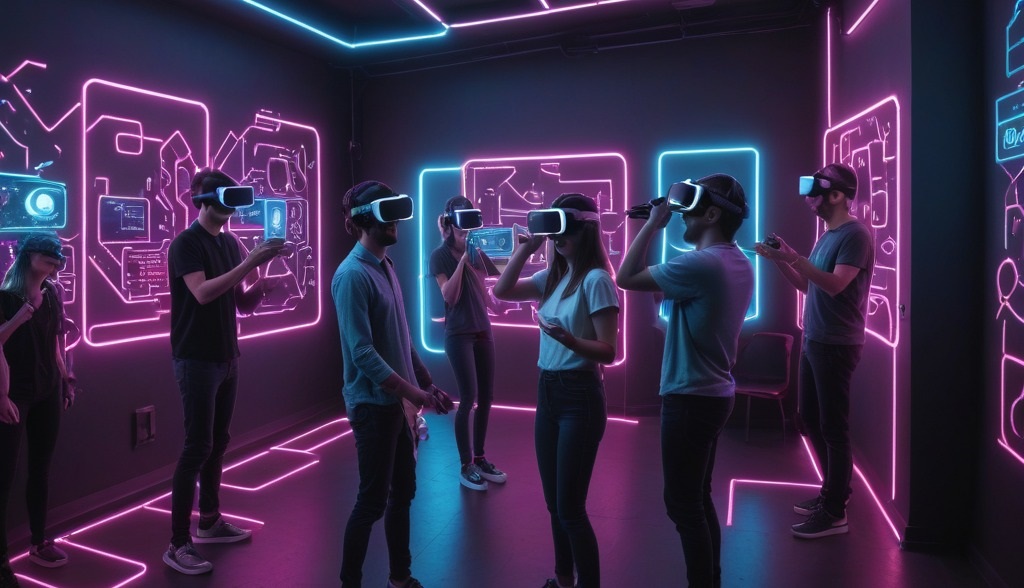
Understanding the mechanics behind VR escape rooms helps players maximize their enjoyment and success rate. These games utilize VR headsets like the Meta Quest 3, PlayStation VR2, or PC-based systems such as the Valve Index to create fully immersive 360-degree environments.
Players use motion controllers to interact with objects naturally—grabbing keys, pulling levers, examining clues up close, and manipulating puzzle elements as they would in physical space. Most VR escape rooms support both room-scale experiences (where players can physically walk around) and seated experiences for those with limited space.
The typical VR escape room session lasts between 45 to 90 minutes, though some games offer shorter or longer experiences. Difficulty levels range from beginner-friendly tutorials to mind-bending expert challenges that require lateral thinking and keen observation skills. Many modern titles incorporate hint systems that provide graduated assistance without completely solving puzzles for players.
Solo vs. Multiplayer Experiences
While some VR escape rooms are designed for solo play, the multiplayer component has become increasingly popular. Games like “Escape Simulator VR” and “The Room VR: A Dark Matter” allow friends to collaborate from different physical locations, communicating via voice chat while exploring the same virtual space. This social dimension replicates the team-building aspect that makes physical escape rooms so appealing for groups.
Top VR Escape Room Games Worth Playing
The VR escape room library has expanded considerably, offering diverse themes and difficulty levels. Here are some standout titles:
- I Expect You to Die series – A spy-themed puzzle game with dark humor and creative death scenarios, available across major VR platforms
- The Room VR: A Dark Matter – A atmospheric mystery game featuring the franchise’s signature intricate puzzle boxes
- Escape Simulator VR – Offers dozens of community-created rooms with both single-player and multiplayer modes
- Red Matter 2 – A sci-fi puzzle adventure set during an alternate Cold War space race
- Hyperstacks VR – Combines escape room puzzles with parkour elements in a cyberpunk setting
These games typically range from $10 to $30, making them significantly more affordable than repeated visits to physical escape rooms. Most are available on multiple platforms, though some remain exclusive to specific VR ecosystems.
Advantages of Virtual Reality Escape Rooms
VR escape rooms offer several compelling advantages over traditional physical venues:
Unlimited Replayability: Unlike physical escape rooms where the puzzles become known after completion, VR games often feature multiple rooms, randomized elements, or entirely different scenarios. Many titles receive regular content updates, providing fresh challenges long after the initial purchase.
Impossible Environments: VR technology enables designers to create scenarios that would be impractical or impossible in reality. Players might shrink to microscopic size, experience zero gravity, or manipulate time itself—narrative possibilities that physical escape rooms cannot achieve.
Cost-Effectiveness: Physical escape rooms typically charge $25-40 per person per session. A $20 VR escape room game can be played repeatedly, shared with household members, and often includes multiple rooms or chapters, delivering substantially more value over time.
Accessibility Benefits: For individuals with mobility challenges, anxiety about enclosed spaces, or those living in areas without physical escape room venues, VR provides an accessible alternative. Players can pause experiences, take breaks as needed, and enjoy the activity without travel requirements.
Challenges and Considerations
Despite their advantages, VR escape rooms come with certain limitations that players should consider:
Motion Sickness Concerns: VR-induced nausea affects some users, particularly during games with artificial locomotion or rapid camera movements. Fortunately, most modern VR escape rooms incorporate comfort options like teleportation movement and vignetting to minimize discomfort. New users should start with shorter sessions and gradually build tolerance.
Reduced Physical Presence: While VR provides impressive visual and auditory immersion, it cannot fully replicate the tactile experience of handling physical objects or the spatial awareness of actually being in a room. The social dynamics also differ—teammates in the same physical location can point at objects and use body language in ways that virtual avatars cannot fully capture.
Hardware Investment: Quality VR experiences require capable hardware. Standalone headsets like the Meta Quest 3 start around $500, while PC-based systems can cost significantly more when factoring in a gaming computer. Setup and space requirements may also present obstacles for some potential players.
Social and Multiplayer Dynamics
The social component has become a cornerstone of VR escape room appeal. Modern titles support remote co-op gameplay, allowing friends and family separated by geography to collaborate on puzzles together. Voice chat integration creates natural communication channels, and many games include gesture systems for pointing out clues or celebrating successes.
Location-based VR escape room arcades have also emerged, offering commercial-grade equipment and specially designed multiplayer experiences. These venues provide the social atmosphere of traditional escape rooms while leveraging VR’s technological advantages. They serve as an excellent introduction to VR for those hesitant to invest in home equipment.
Design Elements That Create Immersion
The best VR escape rooms succeed through meticulous attention to environmental storytelling and puzzle integration. High-quality graphics render detailed environments that reward exploration—subtle clues might hide in book titles, wall decorations, or background details. Spatial audio design creates convincing atmospheres, with creaking floorboards, distant machinery, or whispered hints drawing players deeper into the experience.
Effective puzzle design balances challenge with fairness. The most satisfying VR escape rooms follow logical progression, where solving one puzzle provides information or tools needed for subsequent challenges. The best designers avoid arbitrary pixel-hunting or illogical leaps, instead crafting puzzles that feel intuitive upon solution while remaining challenging during the solving process.
The Future of VR Escape Room Gaming
Emerging technologies promise to enhance VR escape rooms further. Haptic feedback suits and gloves in development will add tactile dimensions, allowing players to “feel” objects they manipulate. Eye-tracking technology could enable more natural interactions and puzzles that respond to where players look. Mixed reality capabilities, which blend virtual elements with real-world surroundings, may create hybrid experiences that use players’ actual physical spaces as part of the game environment.
Artificial intelligence integration represents another frontier. AI could generate dynamically adjusting puzzles that adapt to player skill levels or create procedurally generated rooms ensuring unique experiences with each playthrough. Some developers are already experimenting with AI-driven narrative systems that respond to player choices and create branching storylines.
Related Topic: Survive Your First Night in a Survival Game
Tips for Getting Started with VR Escape Rooms
For newcomers to VR escape rooms, these strategies will enhance your experience:
- Start Simple: Begin with games rated for beginners that include tutorials and hint systems. “I Expect You to Die” offers an excellent introduction with its clear objectives and clever puzzles.
- Communicate Actively: In multiplayer games, constant communication prevents duplicate efforts and helps teammates build on each other’s observations.
- Examine Everything: VR escape rooms reward thoroughness. Pick up objects, rotate them, look underneath furniture, and investigate every interactive element.
- Take Notes: Keep paper and pen nearby for jotting down codes, patterns, or clues that might be relevant later. Many games include virtual notebooks, but physical notes can be easier to reference.
- Manage Your Play Sessions: Take breaks every 30-45 minutes to rest your eyes and prevent fatigue or discomfort.
Conclusion: A Complementary Entertainment Medium
VR escape room games have matured into a legitimate entertainment category that complements rather than replaces physical escape rooms. Each format offers distinct advantages—physical rooms provide tangible social experiences and tactile satisfaction, while VR versions deliver imaginative scenarios, replayability, and accessibility.
For puzzle enthusiasts, VR escape rooms represent an exciting frontier where technology enables unprecedented creative freedom. As hardware becomes more affordable and content libraries expand, these experiences will likely become a standard component of the gaming landscape. Whether you’re a veteran escape room enthusiast or a curious newcomer, VR escape rooms offer compelling challenges and memorable adventures worth exploring.
The technology continues evolving, but the core appeal remains timeless—the satisfaction of solving challenging puzzles through clever thinking and observation. With a VR headset and an escape room game, extraordinary adventures await.
Frequently Asked Questions About VR Escape Room Games
Do I need an expensive VR setup to play escape room games?
Not necessarily. Standalone headsets like the Meta Quest 2 or 3 (starting around $300-500) can run many excellent VR escape room games without requiring a gaming PC. These provide an affordable entry point to VR escape rooms with quality experiences.
Can VR escape rooms cause motion sickness?
Some people experience VR motion sickness, particularly when starting out. Most modern VR escape rooms include comfort settings like teleportation movement and snap turning to reduce nausea. Starting with shorter sessions and choosing games with high comfort ratings helps build tolerance gradually.
Are VR escape rooms suitable for children?
Many VR escape room games are family-friendly, though VR headset manufacturers typically recommend ages 13 and up due to eye development concerns. Parents should review game content ratings and supervise younger players. Some titles offer specifically designed family-friendly experiences with age-appropriate puzzles and themes.
How long does a typical VR escape room game last?
Individual VR escape room scenarios typically last 45-90 minutes, similar to physical escape rooms. However, many VR games include multiple rooms or chapters, providing several hours of total gameplay. The ability to replay and explore different solutions extends the entertainment value considerably.
Can I play VR escape rooms with friends who don’t live nearby?
Yes! Many VR escape room games support online multiplayer, allowing you to team up with friends regardless of physical location. Players communicate via voice chat while collaborating in the same virtual environment. Games like “Escape Simulator VR” and “Keep Talking and Nobody Explodes” specifically design for remote cooperative play.
Are VR escape rooms harder than physical ones?
Difficulty varies by game design rather than format. VR escape rooms can be as challenging or accessible as physical ones. Many VR games offer multiple difficulty levels and adjustable hint systems, allowing players to customize the challenge to their preference. The key difference is interaction method rather than inherent difficulty.
What happens if I get stuck on a puzzle?
Most VR escape room games include hint systems that provide graduated assistance—from subtle nudges to explicit solutions. Unlike physical escape rooms with time limits, many VR games allow unlimited time, letting you step away and return later. Some games include skip options for puzzles that prove too frustrating.
Do VR escape rooms work in small spaces?
Yes. Many VR escape room games support seated or stationary play modes that work in spaces as small as 6×6 feet. Players use controller-based movement instead of physical walking. Room-scale experiences that utilize larger play areas offer enhanced immersion but aren’t required for most games.