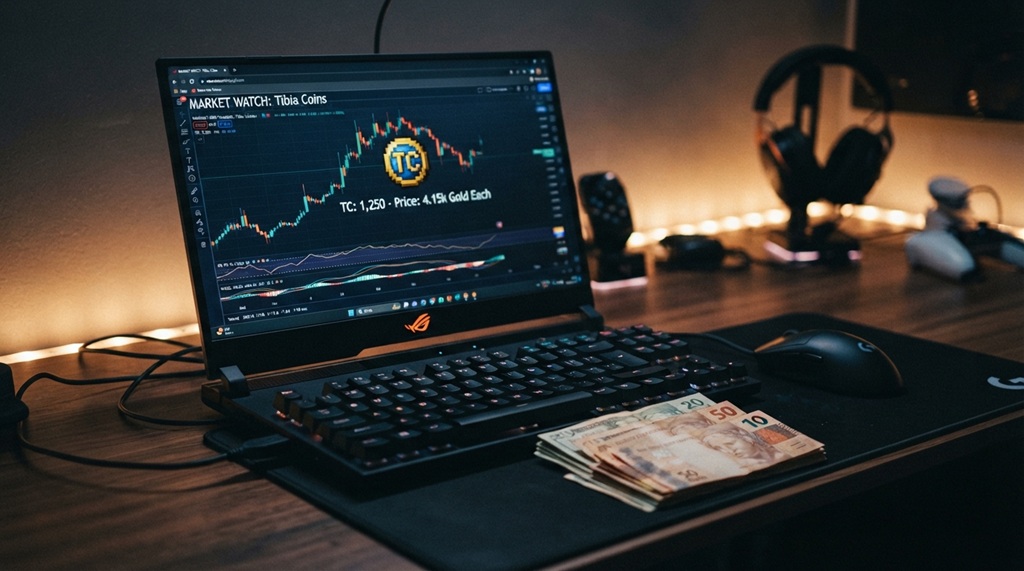
Tibia Coins let players earn real income indirectly by converting them into in-game gold, trading them on the official Tibia Coin Market, or building a following through Tibia-related content creation. They aren’t a cryptocurrency you cash out directly, but they function as a bridge between real money and Tibia’s in-game economy and that bridge is exactly what creates earning opportunities for dedicated players.
If you’ve spent any time in Tibia’s community forums or Discord servers, you’ve probably seen players talk about “flipping TCs,” buying Premium Time with gold instead of cash, or even funding their subscription entirely through smart trading. That’s not a myth. It’s a real, long-standing part of how the game’s economy works.
This article breaks down exactly what Tibia Coins are, how the real-money connection works, which methods are legitimate versus risky, and what you need to know before trying to turn your playtime into profit.
What Are Tibia Coins and Why Do They Matter?
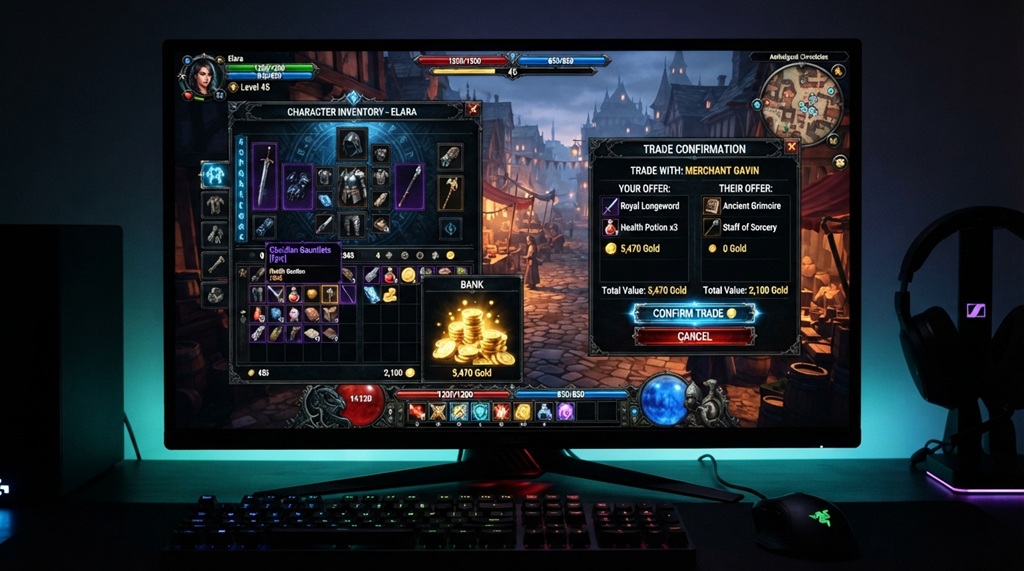
Tibia Coins (TC) are the official premium currency of Tibia, CipSoft’s long-running MMORPG, used to purchase Premium Time, cosmetic items, mounts, outfits, and other content from the in-game Tibia Store.
Players buy Tibia Coins with real money through CipSoft’s official store, typically in bundled packages. Once purchased, TC can be spent directly in the Tibia Store, and this is the important part for anyone interested in “earning” transferred to the in-game Tibia Coin Market, where they’re exchanged for gold, the standard currency earned through hunting, questing, and trading within the game world.
This dual nature is what makes Tibia Coins different from a typical premium currency. In most games, premium currency is a one-way street: you buy it, you spend it, and that’s the end of the transaction. Tibia Coins instead created a loop where real money flows into the game, converts into gold, and that gold can then be used, saved, or effectively “cashed out” in value through gameplay.
How Tibia Coins Connect Real Money to In-Game Gold
The connection works through Tibia’s Coin Market, an official CipSoft-run exchange where players list Tibia Coins for sale in exchange for gold, and other players buy them using gold they’ve earned in-game.
Here’s the basic flow:
- A player buys Tibia Coins with real money from the official store.
- That player (or another player who received TC as a gift) lists Tibia Coins for sale on the in-game Coin Market.
- A different player, who has accumulated gold through hunting or trading, buys those coins using their in-game gold.
- The seller now holds gold instead of TC; the buyer holds TC instead of gold.
Because the exchange rate between TC and gold fluctuates based on supply and demand, savvy players track the market the same way someone might watch currency exchange rates. When the TC-to-gold rate is favorable, converting coins into gold (or vice versa) can meaningfully stretch a player’s resources.
Why the Exchange Rate Moves
The rate isn’t fixed by CipSoft it’s driven entirely by what players are willing to pay. When new content drives demand for cosmetics or Premium Time, more players want TC, pushing the gold price up. When gold is scarce in the economy (after events, bot-banning waves, or server changes), the price shifts the other way. Understanding these cycles is part of what separates players who profit from the system and those who trade at a loss.
The Official, Sanctioned Ways to “Earn” Through Tibia Coins
At its core, earning through Tibia Coins begins by offsetting your real-world gaming costs and leveraging high-value in-game trades. But scaling beyond casual gains demands treatable market mechanics: controlling supply, reading price volatility, and minimizing overhead. Mastering this economic loop takes serious tactical foresight—explore win strategy games with business plans to see how corporate strategy turns virtual grinding into a sustainable financial venture.
Funding Premium Time Without Spending Cash
Many long-term players use in-game gold, earned through hunting, questing, or trading, to buy Tibia Coins on the Coin Market, then redeem those coins for Premium Time. This means a skilled or dedicated player can keep their account premium indefinitely without ever paying CipSoft directly after their initial investment. This isn’t “real income” in the traditional sense, but it’s real money saved which functions the same way in a household budget.
Trading TC When the Market Favors You
Some experienced traders buy Tibia Coins in bulk when prices dip (often during sales or promotions) and hold them until in-game demand pushes the gold exchange rate higher, then sell for a gold profit. This mirrors basic commodity trading logic and requires patience, market awareness, and a willingness to accept that prices can move against you.
Building In-Game Wealth That Has Real-World Value
Because TC can be exchanged for gold, and gold underpins the value of nearly everything tradeable in Tibia rare items, houses, char trades a strong in-game economy indirectly increases the real-world value of a well-developed account. This is where the line between “playing” and “earning” starts to blur for many long-time Tibia players.
The Overlooked Income Path

Streaming, YouTube content, and guides built around Tibia represent one of the most legitimate and often underestimated ways players turn their Tibia knowledge into actual income, separate from the TC market itself.
This is the angle many articles on this topic skip entirely, but it’s arguably more sustainable than TC trading. Players who document boss hunts, share efficient hunting routes, review updates, or build spreadsheets and tools for the community can monetize through ad revenue, sponsorships, Patreon-style support, or by selling their own guides. Unlike Coin Market trading, this income doesn’t depend on game-economy fluctuations or CipSoft’s terms around item trading it’s standard content monetization that happens to use Tibia as the subject.
For players who enjoy teaching, analyzing, or entertaining more than pure trading, this path often produces more consistent results than chasing exchange-rate swings.
Risks and Rules You Need to Understand First
Not every method people associate with “earning real money from Tibia” is actually allowed, and ignoring this distinction can put your account at serious risk.
Real-Money Trading (RMT) Outside Official Channels
Selling in-game gold, items, or entire accounts for real cash through third-party websites or private deals violates CipSoft’s Terms of Service. According to community reports and CipSoft’s own published rules, accounts involved in unofficial real-money trading can face suspension or permanent banning. The official Coin Market exists specifically to give players a sanctioned alternative, so using it instead of unofficial RMT sites is the safer route if trading is your goal.
Botting and Automated Gold Farming
Some players attempt to generate gold (which they then convert to TC value) using unauthorized third-party software. This is against the rules in virtually every MMO, including Tibia, and detection systems plus regular ban waves make this a high-risk, unsustainable strategy rather than a real income source.
Treating It Like Guaranteed Income
Exchange rates between TC and gold move based on player behavior, not a stable market with guarantees. Anyone treating Tibia Coin trading as a dependable income stream, rather than a way to offset gaming costs or occasionally profit, is taking on more risk than the activity usually justifies.
Practical Tips for Managing Tibia Coins Wisely
Getting real value out of Tibia Coins comes down to timing, restraint, and treating it like a resource-management game rather than a get-rich strategy.
Buy TC during official sales.
CipSoft periodically discounts Tibia Coin packages; buying during these windows immediately improves your margin if you plan to trade or convert later.
Watch the Coin Market history, not just the current price.
Tibia’s client shows historical exchange rate trends use them the way you’d check a price chart before buying anything.
Don’t convert everything at once.
Splitting purchases and sales across different market conditions reduces the risk of trading at a bad rate.
Separate “saving money” from “making money” in your head.
Using gold to cover your Premium Time is a guaranteed win. Speculative TC trading for profit is not — plan your gameplay budget assuming the trading side might not pay off.
Stick to official tools only.
The Coin Market and Tibia Store are the only channels where your account stays fully protected under CipSoft’s rules.
Frequently Asked Questions
Can you actually make real money from Tibia Coins?
You can offset or eliminate your Tibia subscription costs by converting in-game gold into Tibia Coins, and some players profit modestly by trading TC when exchange rates are favorable. Direct real-money cash-out isn’t supported by CipSoft, so most “income” comes in the form of savings or in-game wealth rather than withdrawable cash.
Is selling Tibia gold or items for real money allowed?
No, trading in-game currency or items for real cash outside the official Coin Market violates Tibia’s Terms of Service and can result in account suspension. The Coin Market exists specifically as the sanctioned way to convert between TC and gold.
How is the Tibia Coin to gold exchange rate determined?
The rate is set entirely by player supply and demand on the in-game Coin Market, not by CipSoft. It shifts based on factors like sales events, new content, and overall gold availability in the game world.
Is trading Tibia Coins a reliable source of income?
It can supplement a player’s resources, but it isn’t a dependable income stream since exchange rates fluctuate and can move against a trader. Most experienced players treat it as a way to reduce gaming costs rather than a primary income source.
What’s the safest way to benefit financially from Tibia Coins?
Using in-game gold to buy TC for Premium Time, and building Tibia-related content like guides or streams, are the two most sustainable and rule-compliant approaches. Both avoid the account risk tied to unofficial real-money trading.
Conclusion
Tibia Coins create a genuine, if indirect, path between gameplay and real financial value mainly through covering subscription costs, occasional favorable trading on the official Coin Market, and content creation built around the game. The system rewards players who understand market timing and stick to CipSoft’s official channels, while unofficial real-money trading and botting carry real risk to your account. Approached with the right expectations, Tibia Coins can meaningfully lighten what you spend on the game, and for some players, even generate a bit of extra value on top.