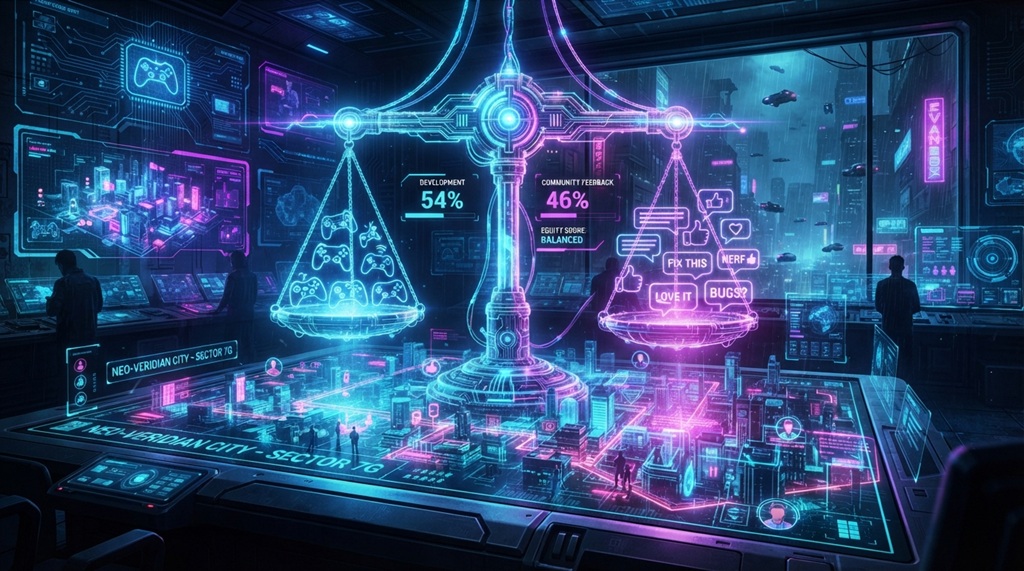
Balancing a game’s meta starts with listening to the community that plays it every day, then turning that feedback into structured, testable data instead of one-off complaints. Developers who ignore player sentiment tend to ship changes that look good on paper but fall apart in real matches. The ones who succeed treat their community — forums, Discord servers, subreddits, competitive scenes — as an extension of the balance team itself.
This isn’t just about reading patch notes threads and picking the loudest opinions. A well-run community can surface problems faster than internal playtesting ever could, simply because of scale: thousands of matches happen every hour across every rank, region, and playstyle. The challenge is filtering that noise into something a design team can actually act on.
Below is a practical breakdown of how gaming communities and developers work together to keep a meta healthy, along with the tools, processes, and pitfalls involved.
Why Community Input Matters for Meta Balance

Community input matters because players expose real-world strategies and edge cases that internal testing teams simply don’t have the time or player volume to find. A studio’s QA team might play a few hundred matches before launch; the live player base plays millions within the first week.
This gap is why so many “balanced” pre-launch builds turn chaotic almost immediately after release. Players discover synergies, exploits, and dominant strategies that weren’t part of any internal test plan. Community-driven data closes that gap by turning millions of matches into a feedback source developers can mine for patterns which characters, weapons, or strategies are overperforming, and in which specific contexts (rank tier, region, game mode).
It also matters because balance isn’t just a numbers problem it’s a perception problem. A mechanic can be statistically fine but still feel unfair to play against, and that sentiment almost always shows up in community spaces before it shows up in win-rate charts.
How Developers Collect and Use Community Feedback
Modern game studios gather player insights by pairing structured channels—like Public Test Realms (PTR/PBE), in-game surveys, and official forums—with unstructured channels like Discord, Reddit, and creator streams, cross-referencing this qualitative sentiment directly against internal telemetry data. Beyond fostering a fairer meta, cultivating a balanced, trusting community drives long-term retention and unlocks powerful ecosystem dynamics—learn how to capitalize on turn gaming communities into high-value revenue.
Structured Feedback Channels
- Public Test Realms (PTR) or beta servers let a subset of players try balance changes before they go live, giving developers a controlled sample size.
- In-game surveys after matches or seasons ask targeted questions about specific characters, weapons, or mechanics.
- Official forums and feedback portals organize discussion by patch or topic, making it easier to track sentiment over time.
Unstructured but High-Signal Channels
- Discord servers, both official and community-run, tend to surface real-time reactions the moment a patch goes live.
- Content creators and streamers often stress-test new metas faster than average players because their content depends on finding what works.
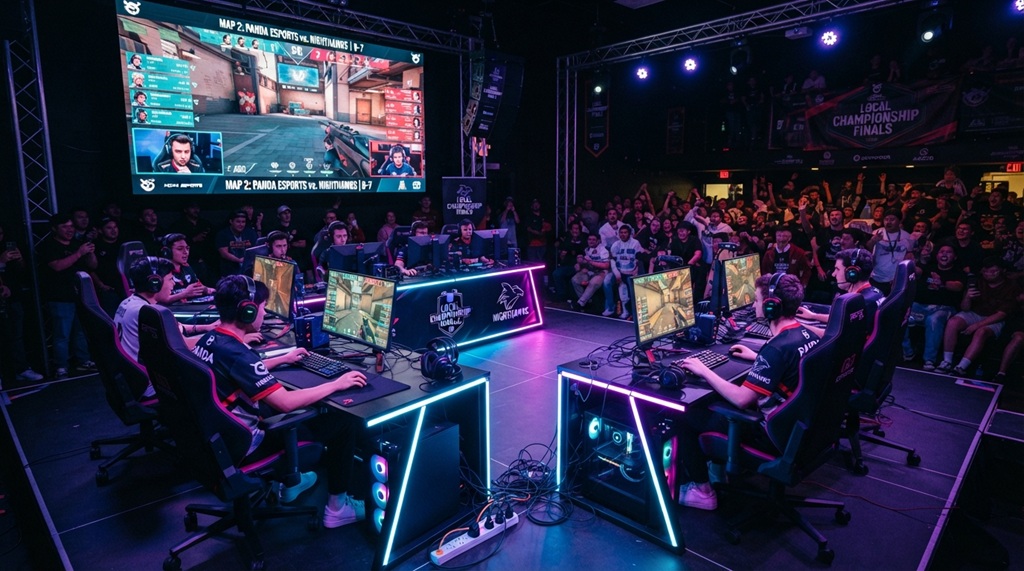
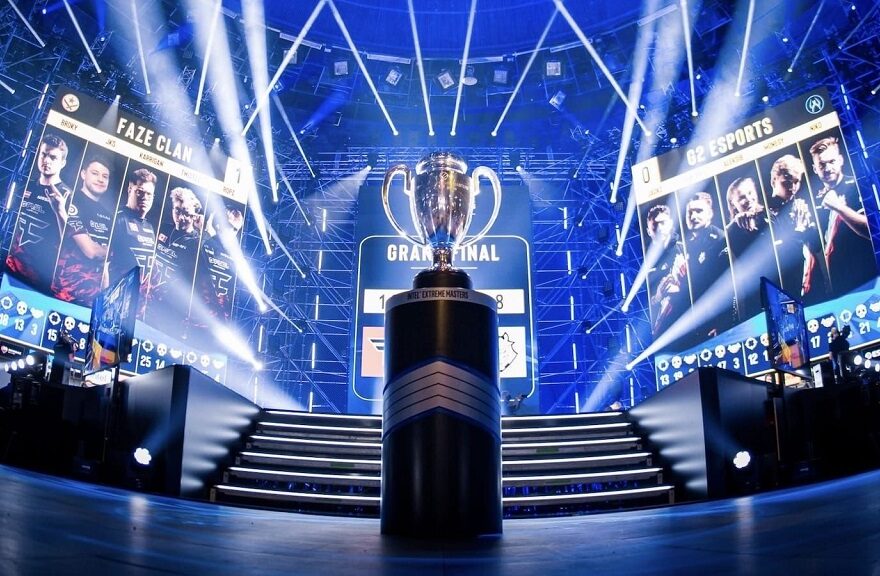
- Esports and competitive scenes reveal how a meta behaves under the highest possible skill ceiling, which is a very different picture from casual play.
The most effective studios don’t treat any single channel as the full picture. A change that looks unpopular on Reddit might be well-received in-game, or a strategy that dominates competitive play might be nearly invisible in casual matchmaking. Cross-referencing sentiment against hard data (win rates, pick rates, ban rates) is what turns opinion into an actionable signal.
Turning Player Complaints Into Actionable Balance Data
Raw complaints become actionable data once they’re categorized, quantified, and checked against actual match statistics rather than taken at face value. Not every complaint reflects a genuine balance problem sometimes it reflects a skill gap, a counter-strategy players haven’t discovered yet, or simple frustration after a loss.
Categorize the complaint.
Is it about a specific character, a weapon type, a map, or a broader system like matchmaking?
Check the data.
Does the win rate, pick rate, or ban rate actually support the complaint, or is this a perception issue?
Segment by skill tier.
A strategy dominant at the top 1% of players might be irrelevant to everyone else, and vice versa.
Look for repetition across independent sources.
If the same issue shows up unprompted in Discord, Reddit, and creator content, it’s far more likely to be real.
Test before committing.
Small, reversible changes on a test server confirm whether the fix actually solves the problem without introducing new ones.
One angle that often gets overlooked: complaint volume isn’t the same as complaint validity, but complaint volume combined with a drop in strategy diversity is a strong signal. If pick rates for one character or build spike while five others disappear from competitive play entirely, that’s a much clearer balance red flag than raw forum sentiment alone even if the forums are relatively quiet about it. Diversity metrics catch problems that vocal complaints sometimes miss, because dominant strategies don’t always generate complaints; sometimes they just quietly make everything else obsolete.
Building a Feedback Loop Between Players and Developers
A functioning feedback loop requires developers to close the circle: collect input, act on it, and then explain the reasoning behind whatever changes (or non-changes) follow. Communities that feel heard stay engaged in the process; communities that feel ignored stop giving useful feedback and start giving venting instead.
What a Healthy Loop Looks Like
- Transparent patch notes that explain why a change was made, not just what changed.
- Regular developer updates blog posts, videos, or livestreams that address top community concerns directly, including ones the team decided not to act on.
- Test servers with clear feedback windows, so players know their input during that period has a real chance of shaping the final patch.
- Follow-up communication after a patch ships, confirming whether the intended fix actually worked or needs another pass.
Common Breakdowns in the Loop
The loop breaks down most often when developers go silent for long stretches, when patch notes list changes without explaining the reasoning, or when the same complaints get raised patch after patch with no acknowledgment. This is when communities tend to disengage from constructive discussion and default to frustration, which then makes future feedback harder to parse for genuine signal.
The Role of Moderators and Community Managers in Balance Discussions
Moderators and community managers act as the translation layer between raw player sentiment and something a design team can actually use, filtering noise, surfacing patterns, and keeping balance discussions productive rather than toxic.
Their responsibilities typically include:
- Curating megathreads or pinned discussions around specific patches or characters, so feedback doesn’t scatter across hundreds of disconnected posts.
- Flagging recurring themes to the design team, especially ones that appear across multiple independent communities.
- Moderating tone, since balance discussions can escalate quickly, particularly around characters or strategies with strong emotional attachment.
- Bridging casual and competitive audiences, who often want very different things from the same patch.
A community manager who understands the game deeply can also spot when a complaint is technically accurate but strategically minor, versus when a smaller, quieter complaint is actually pointing at a much bigger structural issue. That judgment call is difficult to automate and is one of the more underrated parts of the whole balance process.
Using Data Tools and Statistics to Validate Community Concerns

Data tools validate community concerns by measuring what’s actually happening in matches win rates, pick rates, ban rates, and performance by skill tier rather than relying on impressions alone. Community sentiment tells you where to look; statistics tell you whether there’s actually something there.
Key metrics worth tracking include:
- Win rate by tier, since a character or strategy can be balanced on average but wildly overpowered or underpowered at specific skill levels.
- Pick rate and ban rate, which reveal how much the community itself considers something a threat, independent of raw performance numbers.
- Time-to-kill or damage-per-second benchmarks in shooters and action games, comparing intended design targets against real match outcomes.
- Strategy diversity, tracking how many distinct viable builds or team compositions are being used across a given period.
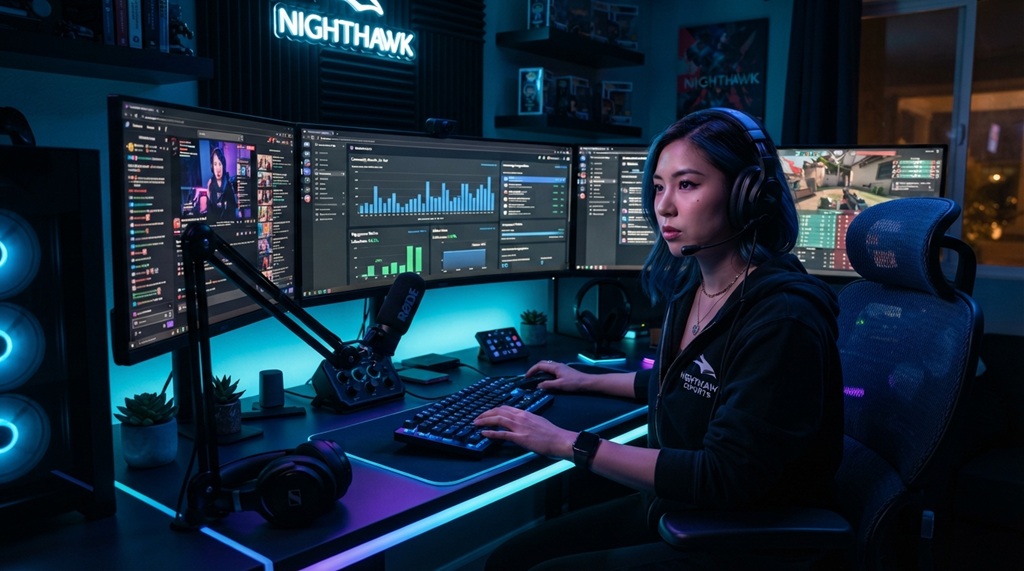
Third-party stat-tracking sites and in-house analytics dashboards both play a role here, and many competitive games now publish some of this data publicly so players can see the reasoning behind changes rather than just the outcome. This transparency itself tends to reduce friction, because players are far less likely to feel a change was arbitrary if they can see the numbers that drove it.
Common Mistakes Communities and Developers Make When Balancing a Meta
The most common mistake is reacting to short-term sentiment spikes instead of sustained data trends, which leads to overcorrections that just shift the problem to a different character or strategy. A newly released character that dominates in its first week often just needs time for counter-strategies to develop, rather than an immediate nerf.
Other frequent mistakes include:
- Balancing around the top 1% of players, which can make a game feel unplayable or unfair for the much larger casual population.
- Ignoring context, such as nerfing a strategy without accounting for the map, mode, or team composition it depends on.
- Making too many changes at once, which makes it impossible to tell which specific adjustment actually caused a shift in the meta.
- Treating the loudest voices as representative, when the most vocal segment of a community is often not reflective of the broader player base.
- Under-communicating, leaving players to assume the worst about why a change was or wasn’t made.
Avoiding these pitfalls generally comes down to patience: waiting for data to stabilize, making incremental changes, and being upfront with the community about the reasoning at every step.
Frequently Asked Questions
How often should developers make balance changes based on community feedback?
Most competitive games settle into a rhythm of major balance patches every few weeks, with smaller hotfixes for urgent issues in between. Changing too frequently makes it hard to isolate what’s actually working, while changing too rarely lets problems compound.
Can a game ever be perfectly balanced?
No perfect balance isn’t realistic in any game with meaningful player choice, since some strategies will always be marginally stronger in certain contexts. The realistic goal is a wide range of viable strategies rather than one dominant “best” option.
Should developers balance around casual players or competitive players?
Most successful games use separate tuning for ranked/competitive modes versus casual ones, since a strategy dominant at the top level can be irrelevant lower down. Fully separating the two isn’t always possible, but skill-tier-based data helps developers avoid over-indexing on either group.
How can a player community actually influence balance changes?
Consistent, specific, data-backed feedback across multiple channels test servers, forums, official surveys carries far more weight than isolated complaints. Reporting exact scenarios (map, mode, matchup) rather than general frustration gives developers something concrete to test.
Why do some balance changes make a meta worse instead of better?
This usually happens when a change addresses symptoms rather than the underlying cause, or when multiple changes ship at once and interact in unexpected ways. It’s also common when a fix is based on short-term sentiment rather than data that’s had time to stabilize.
Conclusion
Balancing a game’s meta is never a one-sided job it depends on a genuine partnership between developers and the communities who play the game every day. The studios that get it right build real feedback loops: they collect input through multiple channels, validate it against hard data, communicate their reasoning openly, and resist the urge to overreact to short-term noise. Communities, in turn, get the most influence when their feedback is specific, consistent, and grounded in actual match scenarios rather than general frustration. Done well, this collaboration doesn’t just fix broken strategies it keeps the whole game feeling fair, varied, and worth coming back to.